Explainer · Skin
The sun damage you cannot see yet
Melanin accumulates below the surface years before it reaches a mirror. Ultraviolet photography makes it visible while it is still reversible.

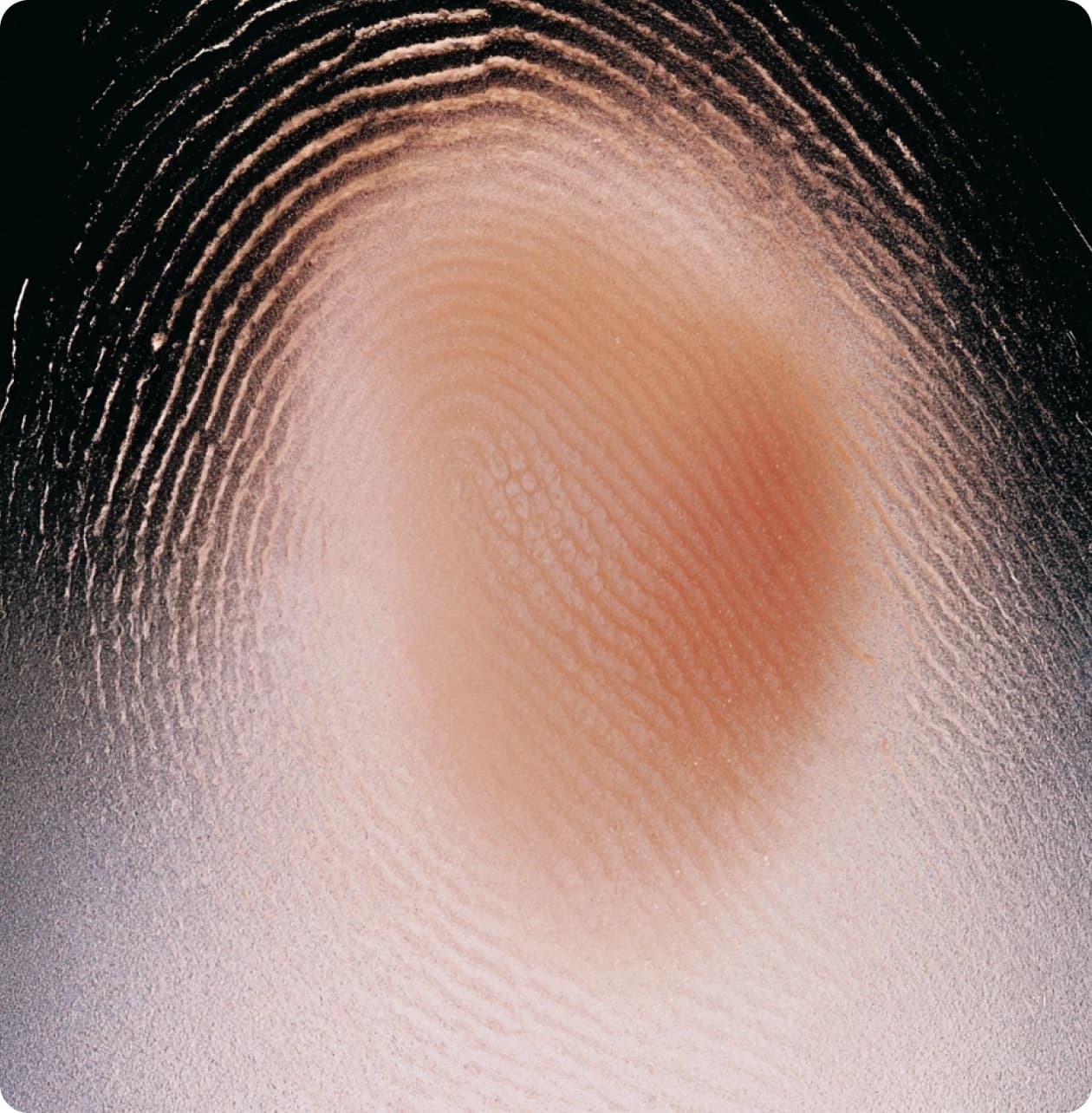
Sun damage has a long settlement period. The exposure happens in your 20s; the spot appears in your 40s. In between, the evidence sits below the surface, where ordinary light cannot reach it but ultraviolet photography can.
That lag is the reason an ultraviolet image is worth having: it shows the ledger before the debt comes due, while more of it is still preventable.
Photoaging is not sunburn accumulating; it is enzymes. In a landmark study, a single dose of UV too small to redden skin induced three collagen-degrading matrix metalloproteinases in human skin, and with exposure every two days, collagenase activity held at more than four times baseline for a week. Each small exposure triggers degradation and imperfect repair, so the collagen deficit compounds quietly over years.
Melanin responds the same way: repeated exposure leaves pigment cells locally reprogrammed toward overproduction, and the clusters build in the epidermis long before they darken into visible spots. Because those clusters absorb ultraviolet light strongly, a UV photograph shows them as dark mottling years early. Sun spots eventually affect more than nine in ten fair-skinned people over 50, and once pigment settles deeper in the skin it clears extremely slowly.
Prevention has trial-grade evidence behind it. In an Australian randomized trial of 903 adults followed for four and a half years, the group assigned to daily sunscreen showed 24% less skin aging than the discretionary-use group, and no detectable increase in skin aging over the whole period. Sunscreen is the rare cosmetic intervention with that kind of receipt.
Some of the damage is recoverable. In a randomized, vehicle-controlled trial, topical retinol improved fine wrinkling with biopsy-confirmed increases in new collagen. Texture and fine lines respond over months; established deep pigment is slower and stingier. The honest ordering is the same as everywhere in this journal: measure first, prevent what you can, and treat what the scan says is actually there.
- 01Flament F, et al. Effect of the sun on visible clinical signs of aging in Caucasian skin. Clinical, Cosmetic and Investigational Dermatology, 2013.
- 02Fisher GJ, et al. Pathophysiology of premature skin aging induced by ultraviolet light. New England Journal of Medicine, 1997.
- 03Hughes MC, et al. Sunscreen and prevention of skin aging: a randomized trial. Annals of Internal Medicine, 2013.
- 04Kafi R, et al. Improvement of naturally aged skin with vitamin A (retinol). Archives of Dermatology, 2007.
- 05Nakamura M, et al. Environment-induced lentigines: formation of solar lentigines beyond ultraviolet radiation. Experimental Dermatology, 2015.