Program · Skin
The layers skin experiment
Two facial scans, ninety days apart, read by a dermatologist who recommends what to change in between.
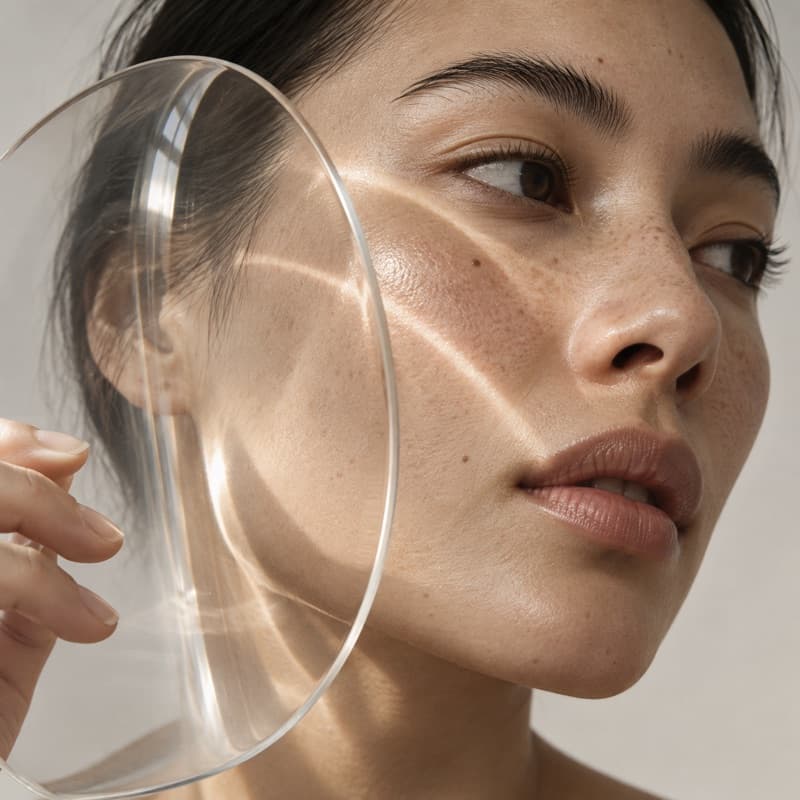
Your skincare routine is an uncontrolled experiment. You change a couple products at once, judge the result in your mirror, and let memory and feeling determine the outcome. Memory is a poor instrument for this. It fades, flatters, and adapts to gradual change or lack thereof.
In our skin experiment, you get skin scans ninety days apart to quantify what actually changed, with a dermatologist guiding the change in between.
The experiment runs as our skin package: two scans, ninety days apart, each followed by a dermatologist consultation. Leave your email and we will reach out to schedule your first visit.
The scan is an advanced skin analysis built on multispectral imaging. Your face is captured under standard white light, ultraviolet light, and cross-polarized light, and the images are analyzed computationally. The three modes exist because they read different depths of the skin. From them, eight measures.
Every measure is scored as a percentile against a reference population matched to your age and skin type. The analysis also estimates your “biological” skin age, so you can see each feature it outlined and where.
First visit: We image your face in our San Francisco clinic. The capture takes about ten minutes. Then you sit down with a dermatologist to go through the results and your current routine (what you use, the order you apply it in, and how often you actually follow it). The dermatologist recommends treatment based on what the scan shows: prescription actives, over-the-counter products, or changes to what you already use. We do not sell products, so the recommendation serves your skin and nothing else.
Second visit: We rescan and put your results side by side. Your dermatologist goes through what moved, what did not, and what that says about the treatment, then adjusts the plan from evidence instead of impression.
We recommend 90 days in between scans. The epidermis replaces itself roughly every six to eight weeks in adults. 90 days is long enough for pigment, texture, and follicular changes to express at the surface, and short enough that you can hold a routine steady without drifting.