Guide · Blood
The blood panel worth repeating: twelve biomarkers that change decisions
Most of a standard panel barely moves in a year. The short list that shifts within a season, and why cadence matters more than coverage.
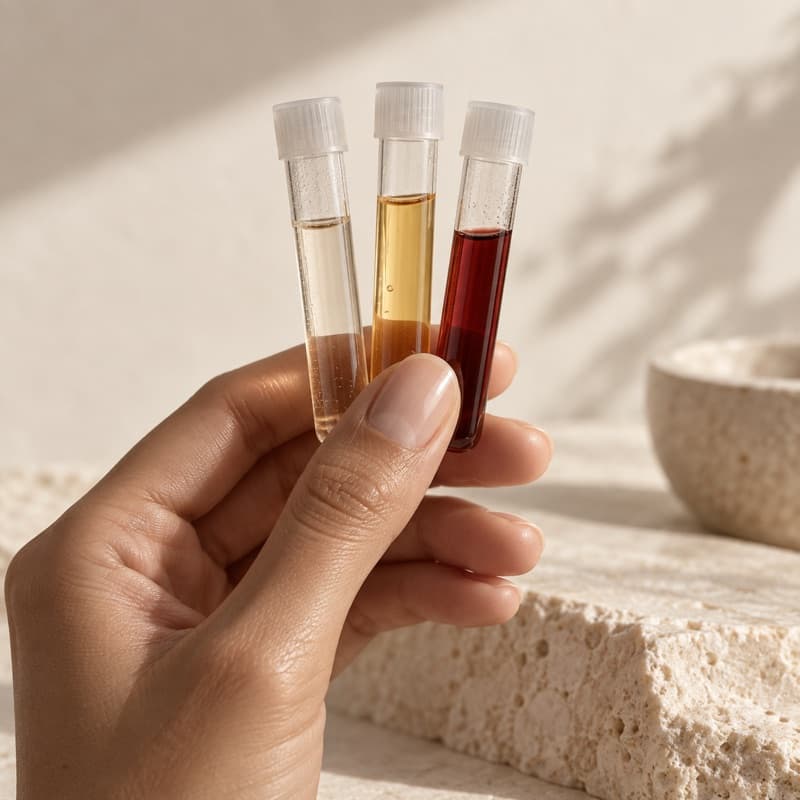
Most of a blood panel is slow. Some values barely drift in a year, and retesting them quarterly re-measures the same number. A useful repeat panel is built the other way around: start from the markers that respond within weeks to months, and from what you would do differently if they moved.
Twelve earn the slot. Metabolic: HbA1c, fasting glucose, fasting insulin. Lipids: ApoB, LDL-C, triglycerides, HDL-C. Inflammation and organ function: hs-CRP, ALT, ferritin. Regulation: TSH and vitamin D.
Each one changes on a quarterly timescale or faster, and each has a decision attached. HbA1c integrates roughly the prior eight to twelve weeks of glucose, because red cells live about 120 days; a quarter is exactly one fresh window. Lipids respond to a statin, a diet change, or training within four to twelve weeks, which is why cardiology guidelines schedule the recheck there. ALT falls within weeks when a fatty liver is unloading; ferritin tracks iron repletion dose by dose; TSH confirms a thyroid dose change in about six weeks; vitamin D reflects a season of sun and supplementation.
Fasting insulin is the quiet one. Glucose is defended by compensation and often holds normal for years while insulin rises underneath it, so the pair together reads earlier than either alone.
Every marker has biological noise: your own values fluctuate around a personal set point even with nothing changing. Within-person variation runs about 5% for total cholesterol, 10 to 13% for ALT and ferritin, and near 20% for triglycerides. Combining that noise with assay error gives each marker a reference change value, the smallest difference worth believing: roughly 14% for glucose and up to about 55% for triglycerides.
The practical reading: triglycerides at 150 one quarter and 180 the next is likely the same person on a different day. 150 to 250 is signal. hs-CRP is noisy enough that the AHA recommends two measurements about two weeks apart, averaged, with anything above 10 mg/L discarded as acute inflammation and repeated later.
A single draw also understates risk at the population level. Long-term cohort work on cholesterol and blood pressure shows that associations estimated from one baseline measurement miss about a third of the true relationship with usual levels within the first decade, and more after that, because one-off values regress toward the mean. The marker you measure repeatedly is the one whose trend you can actually trust.
That is the quiet argument for cadence: not more numbers, but numbers whose direction means something.
- 01Clarke R, et al. Underestimation of risk associations due to regression dilution in long-term follow-up of prospective studies. American Journal of Epidemiology, 1999.
- 02EFLM Biological Variation Database: within-subject variation estimates for common analytes.
- 03Pearson TA, et al. Markers of inflammation and cardiovascular disease: AHA/CDC scientific statement. Circulation, 2003.
- 04Grundy SM, et al. 2018 AHA/ACC multisociety cholesterol guideline: 4-12 week lipid recheck after therapy change. Circulation, 2019.
- 05NGSP. HbA1c and estimated average glucose: the 8-12 week measurement window.